
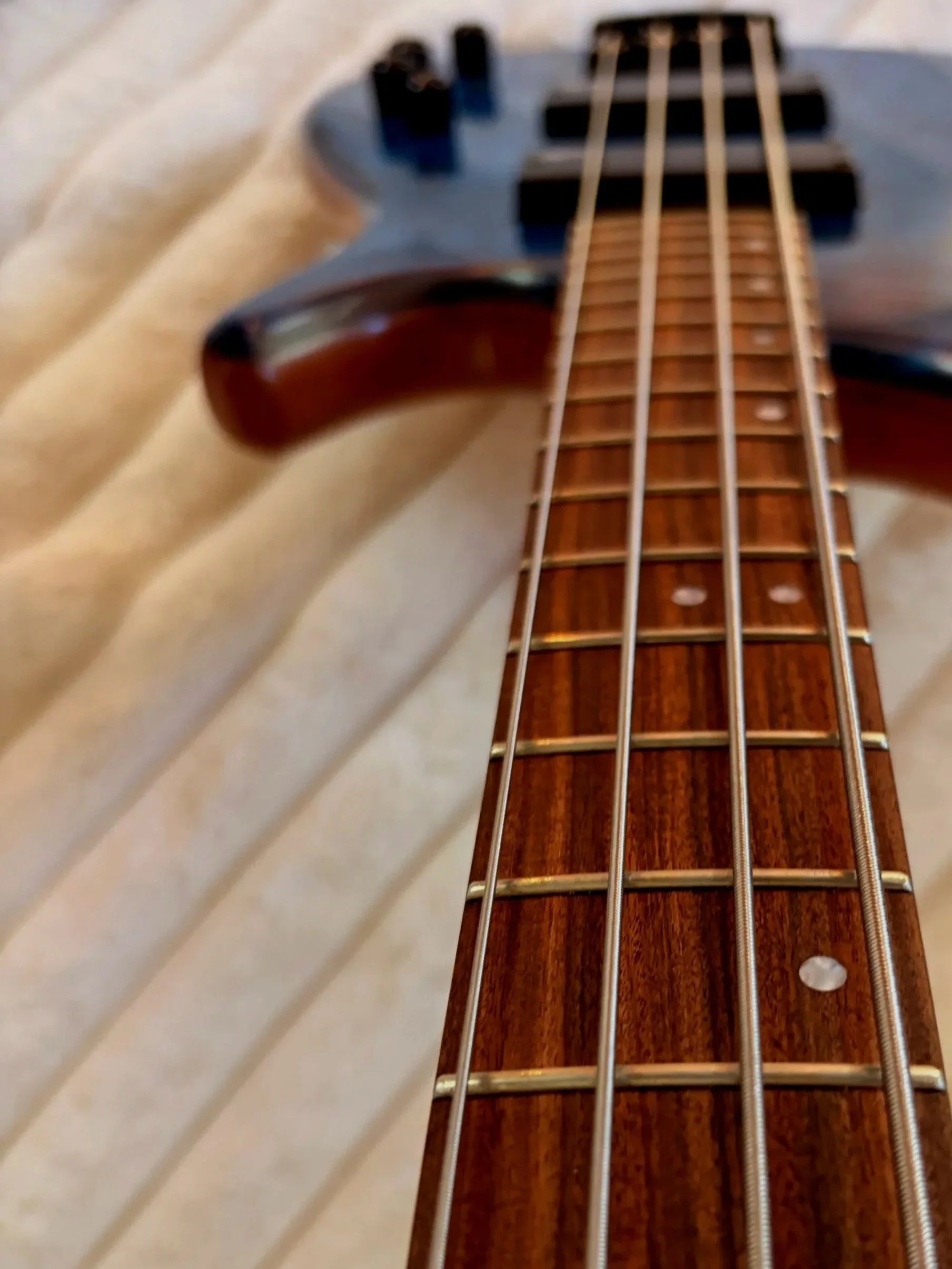
Each build develops through a long series of choices, tests, adjustments.
And occasional changes of direction.
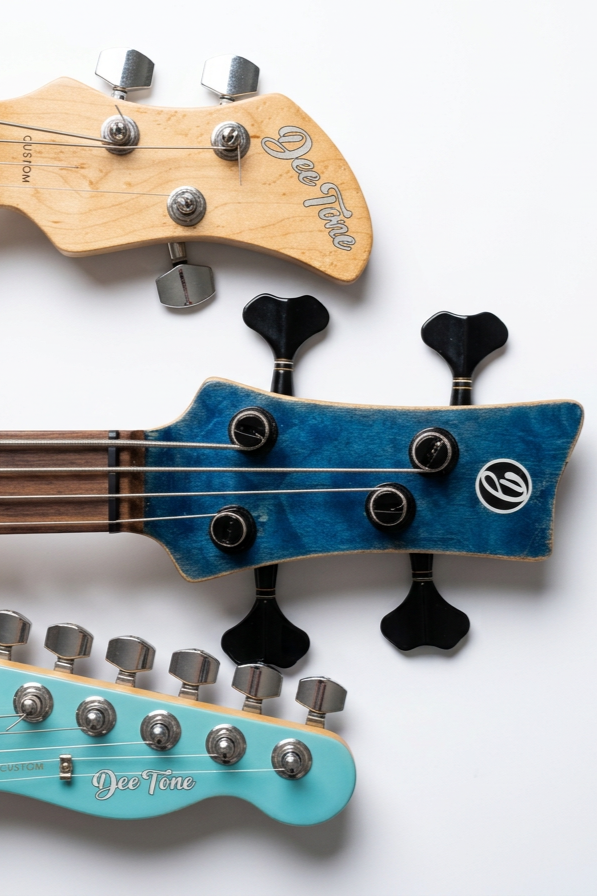
Built by Hand, Guided by Precision
Routers, templates, digital modeling, 3D printed parts, sanding beams, measuring tools, carefully planned jigs. Rasps, a scraper, sandpaper, and several hours of slowly refining a curve by hand.
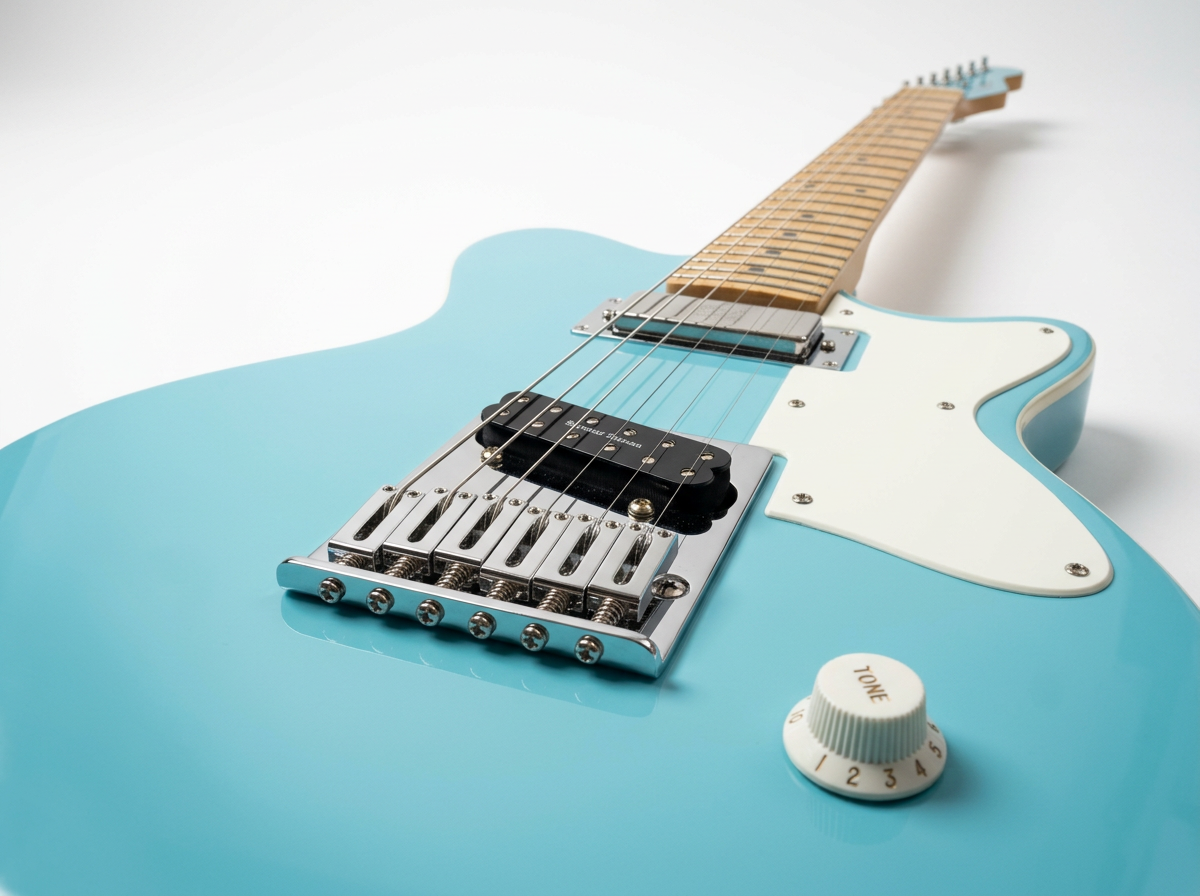
It’s a complete object. The body shape affects balance. The neck profile affects how the player connects with it. The bridge height affects the neck geometry. The pickup placement affects the sound and the visual composition. The size and location of a control knob changes whether the design feels calm or crowded.
Why?
I started building guitars because I was fascinated by the idea that an instrument could begin as a pile of wood, hardware, electrics, measurements, and rough sketches. Then slowly become something people connect with on an emotional level.
There is a moment in every build when that happens.
The wood stops looking like raw material. The shape begins to make sense. The neck settles into the hand. The hardware starts to belong there. You can finally see the instrument that had previously existed only in your head.
That moment is what keeps me building.
I am inspired by guitars that feel complete. Instruments where the shape, sound, materials, finish, and feel all seem to come from the same idea. I love the directness of a Telecaster, the elegance of a great carved top, the precision of modern boutique guitars, and the visual movement of figured wood under a thin finish.
I do not want to copy any one of those things.
I want to understand why they work, then use those lessons to create something personal.